Most IVF cycles do not fail because of the procedure.
They fail because of the embryo. And the embryo fails because of its genetics – something no incubator, no stimulation protocol, and no embryologist’s grading system can fix after the fact. PGT addresses this at the source, before the transfer happens.
At 35, roughly 40 percent of a woman’s eggs carry a chromosomal abnormality. At 40, that figure rises to 70 to 80 percent. An embryo that looks perfect under a microscope – a top-grade Day 5 blastocyst can carry one of these errors and still fail to implant, or implant and miscarry, with no external sign of anything wrong.
Preimplantation genetic testing in Wakad, offered by Dr. Pavan Bendale (M.B.B.S., DGO, DNB) at his Tathawade clinic, screens embryos for these chromosomal and genetic errors before they are transferred, so only the embryos with the highest chance of resulting in a healthy pregnancy are used. Three types are available: PGT-A for chromosomal number errors, PGT-M for inherited single-gene conditions, and PGT-SR for chromosomal structural rearrangements.

What Is PGT and What Does It Actually Test?
Preimplantation genetic testing is a procedure performed on embryos created through IVF before they are transferred to the uterus. A small sample of cells is taken from each embryo, analysed in a genetics laboratory, and the results are used to identify which embryos are chromosomally normal or genetically unaffected before any transfer decision is made.
There are three distinct types, each testing for something different.
PGT-A: Chromosomal Screening
PGT-A tests embryos for aneuploidy – an abnormal number of chromosomes. A normal human embryo has 46 chromosomes, arranged in 23 pairs. An aneuploid embryo has too many or too few, which leads to failed implantation, miscarriage, or in some cases, a live birth with a chromosomal condition such as Down syndrome (trisomy 21), Edwards syndrome (trisomy 18), or Patau syndrome (trisomy 13).
PGT-A screens all 24 chromosome types using next generation sequencing (NGS), identifying embryos that are euploid (chromosomally normal) and those that are aneuploid (abnormal). Only euploid embryos are transferred.
This is the most commonly performed type of PGT and is particularly relevant for women over 35, couples with repeated IVF failure, and those with a history of recurrent miscarriage.
PGT-M: Single-Gene Disorder Testing
PGT-M tests embryos for a specific inherited condition that one or both parents carry – conditions caused by a mutation in a single gene.
In Maharashtra and across India, the most common reason couples pursue PGT-M is thalassaemia. Both parents may be thalassaemia trait carriers with no symptoms of their own, but each pregnancy carries a 25 percent chance of producing a child with thalassaemia major. PGT-M identifies embryos that are unaffected before transfer, allowing the couple to avoid passing the condition on entirely.
Other conditions tested through PGT-M include cystic fibrosis, sickle cell disease, spinal muscular atrophy (SMA), Huntington’s disease, and BRCA1 or BRCA2 mutations associated with hereditary cancer.
PGT-M requires a custom genetic probe to be designed for each family before the IVF cycle begins. This preparation takes 6 to 8 weeks and is a necessary step that cannot be skipped or shortened. Couples considering PGT-M need to plan this lead time into their treatment timeline.
PGT-SR: Structural Rearrangements
PGT-SR is used when one or both parents carry a chromosomal structural rearrangement – typically a balanced translocation or an inversion.
A person with a balanced translocation has the correct total amount of chromosomal material, just rearranged. They are usually healthy with no physical symptoms. The problem appears in their embryos, where the rearrangement can produce offspring with an unbalanced chromosomal complement, leading to repeated miscarriage or a child born with serious developmental conditions.
PGT-SR identifies which embryos have inherited a balanced or normal chromosomal arrangement and are safe to transfer.
Who Should Consider PGT Before an IVF Transfer?
PGT is not recommended for every IVF patient. It is indicated for specific situations where the probability of a chromosomally abnormal embryo is high enough to justify the additional step.
Dr. Pavan Bendale recommends PGT in the following cases:
- Advanced maternal age (35 and above) — the rate of egg aneuploidy rises steeply with age, making chromosomal screening significantly more relevant
- Recurrent IVF failure — two or more failed embryo transfers despite good embryo grades point toward a chromosomal cause that visual grading cannot identify
- Recurrent miscarriage — chromosomal abnormalities in the embryo account for 50 to 60 percent of first-trimester miscarriages; PGT-A can break this cycle
- Known carriers of inherited single-gene conditions — thalassaemia, cystic fibrosis, SMA, sickle cell, Huntington’s, BRCA mutations
- One or both partners carrying a balanced chromosomal translocation or inversion
- A previous pregnancy or child affected by a chromosomal condition
- Unexplained infertility where embryo quality appears good but transfers consistently fail
PGT is not a guarantee of a successful pregnancy. It is a tool that significantly improves the information available before a transfer decision is made, reducing the risk of transferring an embryo that has no realistic chance of resulting in a live birth.
How PGT Works — Step by Step
Step 1: IVF Cycle and Embryo Development
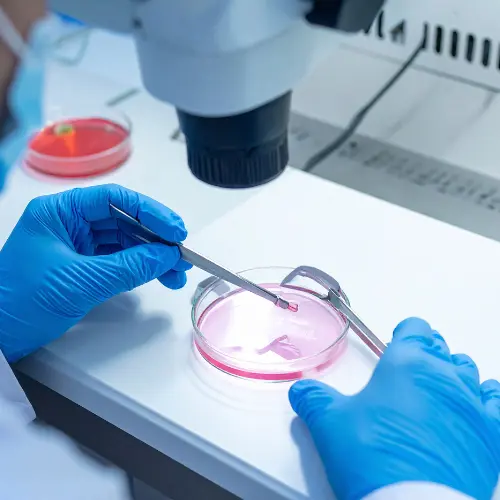
PGT begins with a standard IVF cycle – ovarian stimulation, egg retrieval, fertilisation, and embryo culture. Embryos are grown in the laboratory until they reach the blastocyst stage on Day 5 or Day 6.
Blastocyst development is important. PGT biopsy is performed at this stage because the embryo is large enough to provide sufficient cells for accurate testing without compromising the inner cell mass that becomes the baby.
Step 2: Trophectoderm Biopsy
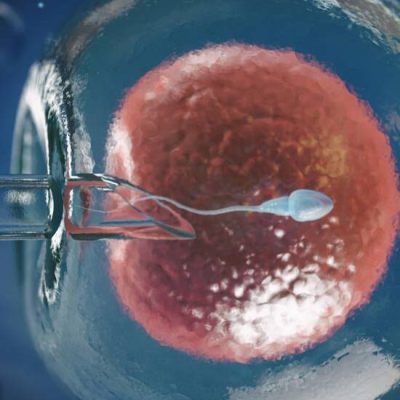
A few cells are removed from the trophectoderm – the outer layer of the blastocyst that goes on to form the placenta. The inner cell mass, which becomes the baby, is not touched.
This is the current clinical standard. Day 3 biopsy (the older approach) removed a cell from a much smaller embryo and is no longer considered best practice. Day 5 trophectoderm biopsy provides more cells, higher accuracy, and a lower impact on the embryo itself.
Step 3: Embryo Vitrification
Immediately after biopsy, all embryos are vitrified and stored while biopsy results are awaited. No embryo is transferred in a fresh cycle after PGT biopsy. The vitrification step preserves embryo quality completely while the genetic analysis is completed.
Step 4: Genetic Analysis
Biopsied cell samples are sent to an accredited genetics laboratory. For PGT-A, next generation sequencing (NGS) analyses all 24 chromosome types simultaneously, with results typically available within 7 to 14 days.
For PGT-M, the analysis uses the custom probe prepared in advance for the specific genetic condition in the couple’s family. For PGT-SR, the analysis identifies whether the embryo has inherited a balanced or unbalanced chromosomal arrangement.
Step 5: Euploid Embryo Transfer
Once results are reviewed, Dr. Pavan Bendale discusses the findings with the couple. Euploid or unaffected embryos are identified for transfer. The frozen embryo transfer cycle is then planned, typically within the next menstrual cycle.
Aneuploid embryos, or those carrying the tested genetic condition, are not transferred. Mosaic embryos, which contain a mix of normal and abnormal cells – represent a more nuanced clinical situation and are discussed individually, with guidance from current international evidence on their transferability.
What PGT Can and Cannot Tell You
PGT-A screens for chromosomal number errors. It does not screen for all possible genetic conditions.
An embryo that tests as euploid on PGT-A is chromosomally normal for the 24 chromosomes tested. It is not a guarantee that the embryo is free of every genetic variant or single-gene mutation. A normal PGT-A result means the embryo has the right number of chromosomes. It does not mean the embryo will definitely result in a live birth, implantation failure can still occur for reasons unrelated to chromosomal status, including uterine factors and embryo-endometrial synchrony.
PGT significantly reduces the risk of certain outcomes. It does not eliminate all reproductive risk.
This is explained clearly at Dr. Pavan Bendale’s consultation before any testing begins. Couples who understand exactly what PGT tests for, and what it does not, are far better positioned to make a decision about whether it is right for their situation.
The European Society of Human Reproduction and Embryology (ESHRE) publishes comprehensive clinical guidelines on PGT for all three types, updated regularly as technology and evidence evolve. These guidelines inform the clinical approach used by Dr. Pavan Bendale.
Frequently Asked Questions About PGT in Wakad
Does PGT harm the embryo?
Day 5 trophectoderm biopsy, which is the current standard, has a very low reported impact on embryo viability. Cells are taken only from the outer layer that becomes the placenta.
Multiple large studies and data from the ASRM confirm that blastocyst biopsy does not significantly reduce implantation or live birth rates compared to non-biopsied embryos. The older Day 3 biopsy carried higher risks, which is why it is no longer the standard.
How many of my embryos will come back as normal after PGT-A?
This depends on the age of the egg used to create the embryo. Women under 35 can expect roughly 50 to 65 percent of blastocysts to be euploid. Between 35 and 40, that drops to 30 to 50 percent. Above 40, fewer than 30 percent of blastocysts may be chromosomally normal.
If only a small number of embryos are available for biopsy, the chance of having at least one euploid result depends heavily on age. Dr. Pavan Bendale discusses this realistically before any cycle begins.
We are both thalassaemia carriers. Should we do PGT-M?
Yes, if you are undergoing IVF. If both partners are thalassaemia trait carriers, each embryo has a 25 percent chance of being affected with thalassaemia major, a 50 percent chance of being a carrier like you, and a 25 percent chance of being completely unaffected.
PGT-M identifies which embryos are unaffected or carrier (both are healthy outcomes) and which are affected, so only safe embryos are transferred. This is one of the most impactful applications of PGT-M in the Indian clinical context.
We had three miscarriages. Would PGT help?
Chromosomal abnormalities cause 50 to 60 percent of first-trimester miscarriages. If your previous losses have not been investigated or if the products of conception were not tested, there is a significant probability that chromosomal errors in the embryos were the underlying cause.
PGT-A in a subsequent IVF cycle identifies and removes aneuploid embryos from the transfer pool, directly addressing the most statistically likely cause of recurrent early pregnancy loss.
We had two failed IVF transfers with good-grade embryos. Is PGT the answer?
It may be. Repeated implantation failure with good-grade embryos despite adequate uterine preparation is one of the clearest indications for PGT-A, because embryo grade does not correlate well with chromosomal status.
Before recommending PGT, Dr. Pavan Bendale will also assess uterine factors, thrombophilia, and endometrial receptivity as possible contributing causes, since PGT addresses chromosomal cause specifically and not all causes of implantation failure.
How long does the PGT process add to our IVF timeline?
For PGT-A, results typically take 10 to 14 days after biopsy. Adding the frozen embryo transfer cycle, PGT-A adds roughly 4 to 6 weeks to the overall IVF timeline.
For PGT-M, probe preparation takes 6 to 8 weeks before the IVF cycle even begins. Couples need to account for this lead time when planning. Dr. Pavan Bendale outlines the full timeline clearly at the initial consultation.
Can PGT be done with donor eggs?
Yes. PGT-A can be performed on embryos created with donor eggs if indicated. This may be recommended when the male partner has a known chromosomal structural rearrangement, or when there is a specific single-gene condition requiring PGT-M that comes from the male side. For couples using donor egg IVF, Dr. Pavan Bendale advises on whether PGT adds clinical value to the specific situation.
I am from Hinjewadi. Is the clinic accessible?
Yes. Dr. Pavan Bendale’s clinic is in Tathawade, a short drive from Hinjewadi Phase 1, 2, and 3, and easily reachable from Baner, Balewadi, Wakad, Aundh, and Pimpri-Chinchwad.
Appointment details can be found here.
“We had two failed IVF cycles at another clinic and nobody suggested PGT. When we came to Dr. Pavan Bendale, he explained that our embryo grades told us nothing about their chromosomes. We did PGT on the next cycle, had two euploid embryos out of five, transferred one, and are now 18 weeks pregnant.”
– Verified patient, Google Reviews
Know What You Are Transferring. Not Just What It Looks Like.
Embryo grading is a visual assessment. Chromosomal status is not visible.
Preimplantation genetic testing in Wakad gives you both pieces of information before a transfer decision is made, so the embryo going into the uterus is the one with the most complete, accurate chance of becoming a healthy pregnancy.
If you have had repeated IVF failure, recurrent miscarriage, or carry a known genetic condition, a consultation with Dr. Pavan Bendale will clarify whether PGT is indicated for your case and exactly what the process would involve for you specifically.
Read more about Dr. Pavan Bendale’s clinical background and qualifications before your visit.
Dr. Pavan Bendale, Fertility Specialist, Wakad
301, 3rd Floor, Darekar Heights, Dange Chowk Road, Bhumkar Chowk Rd, Opp. Pandit Petrol Pump, Tathawade, Pune 411033
Call / WhatsApp: 07840950737
Email: pavanbendale007@gmail.com