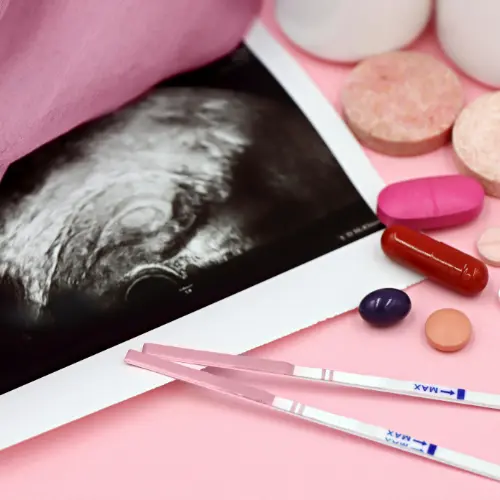
Quick answer: Semen analysis and DFI testing in Wakad is available same-day at Dr. Pavan Bendale’s in-house andrology lab in Tathawade, Wakad serving couples from Wakad, Hinjewadi, Baner, Balewadi, Pimpri-Chinchwad, and surrounding areas. Standard semen reports (7 parameters, WHO 2021 standards) are ready the same day; DFI (DNA Fragmentation Index) results take 24–48 hours. Dr. Pavan Bendale (M.B.B.S., DGO, DNB) is Wakad’s leading specialist for combined semen analysis and DFI testing, reviewing every report personally before recommending next steps whether that’s lifestyle correction, IUI, IVF, or ICSI. Male factor drives 40–50% of infertility cases, yet it’s the test couples skip most often.

Male factor contributes to nearly 40–50% of all infertility cases. Yet in most couples coming to Dr. Pavan Bendale after months of failed attempts, the male partner has either never been tested – or was handed a basic two-line report that said “normal” and sent on his way. That report missed everything that matters.
A count and motility printout is not a semen analysis. A real semen analysis, done to WHO 2021 standards, tests seven distinct parameters and gives a complete picture of sperm health. Add DFI testing on top of that, and you have the full picture – the kind of information that actually changes your treatment plan and your outcome.
What Does a Semen Analysis Actually Measure?
Most people asking about semen analysis in Wakad have already heard about sperm count. But count alone tells you very little. Here is what a complete semen analysis under Dr. Pavan Bendale evaluates:
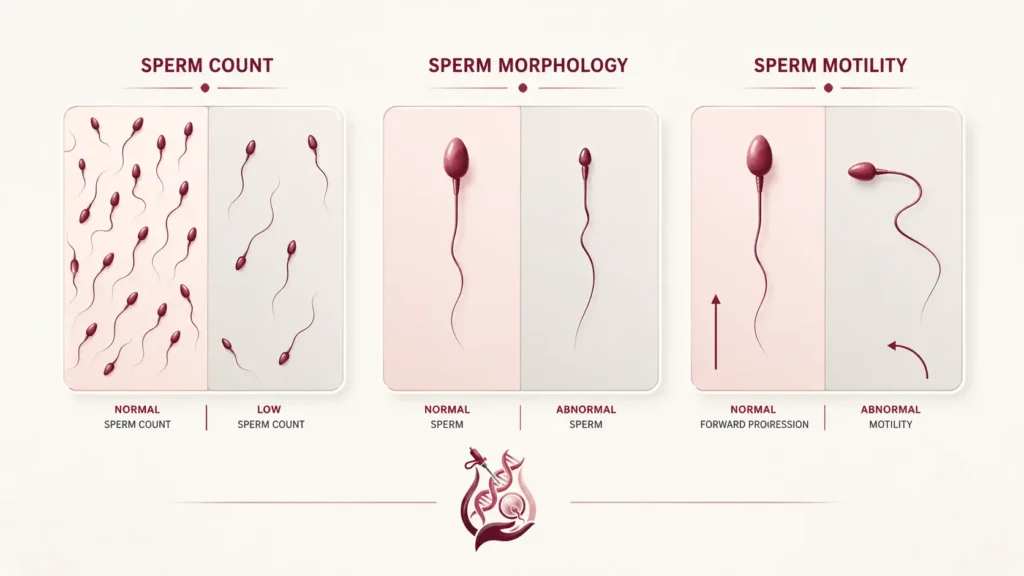
Sperm Count (Concentration)
The number of sperm present per millilitre of semen. According to WHO 2021 reference values, a count of 15 million per ml or above is considered normal. Below this threshold, the condition is called oligozoospermia. Severely low count (below 5 million) or no sperm at all (azoospermia) requires a different treatment path entirely – one that begins with accurate diagnosis, not guesswork.
Motility – How Well Sperm Actually Move
A sperm that cannot swim cannot reach the egg, no matter how many there are. Progressive motility – meaning sperm moving in a straight or broadly forward direction – should be at least 32% of the total. When this falls short, the condition is called asthenozoospermia. This is one of the most common findings in male infertility and is frequently missed when labs only check count.
Morphology – Shape Under Kruger Criteria
Morphology refers to the physical structure of individual sperm – the shape of the head, midpiece, and tail. Dr. Pavan Bendale’s lab grades morphology using strict Kruger criteria, the most clinically precise method available. At least 4% of sperm should have normal form. When fewer than 4% are normally shaped, the condition is teratozoospermia – and it can reduce fertilization rates even in IVF cycles, something couples are rarely told upfront.
Semen Volume
A normal ejaculate volume is 1.5ml or more. Low volume is not just an inconvenience – it can indicate issues with the seminal vesicles, prostate, or ejaculatory ducts. These problems are diagnosable and often treatable, but only if volume is actually measured.
Liquefaction Time
Freshly ejaculated semen is thick and gel-like. It should liquefy within 15 to 30 minutes. If it stays thick for longer, sperm remain trapped and cannot travel effectively toward the egg. This parameter is skipped entirely by most standalone labs in Pimpri-Chinchwad and Hinjewadi areas.
pH Level
Normal semen pH falls between 7.2 and 8.0. Values outside this range can point to infection, inflammation, or obstruction in the male reproductive tract – all of which have a direct impact on sperm function.
White Blood Cell Count
The presence of elevated white blood cells in semen, called leukocytospermia, signals an active infection or inflammatory process that is quietly damaging sperm quality. This is treatable. But if it is never checked, it is never found – and the couple continues on a path that will not work.
Dr. Pavan Bendale’s andrology lab checks all seven of these parameters for every patient. The report is processed on-site, immediately after sample collection, following WHO 2021 standards throughout.
What Is DFI Testing and Why Does a “Normal” Semen Report Sometimes Mean Nothing?
Here is something that surprises most couples: a man can have a perfectly normal sperm count, good motility, and acceptable morphology – and still be the reason the couple cannot conceive, or keeps miscarrying.
The answer lies inside the sperm, in its DNA.
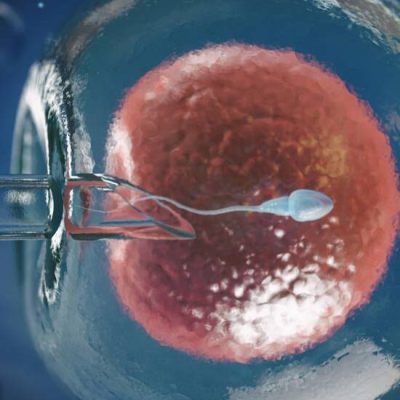
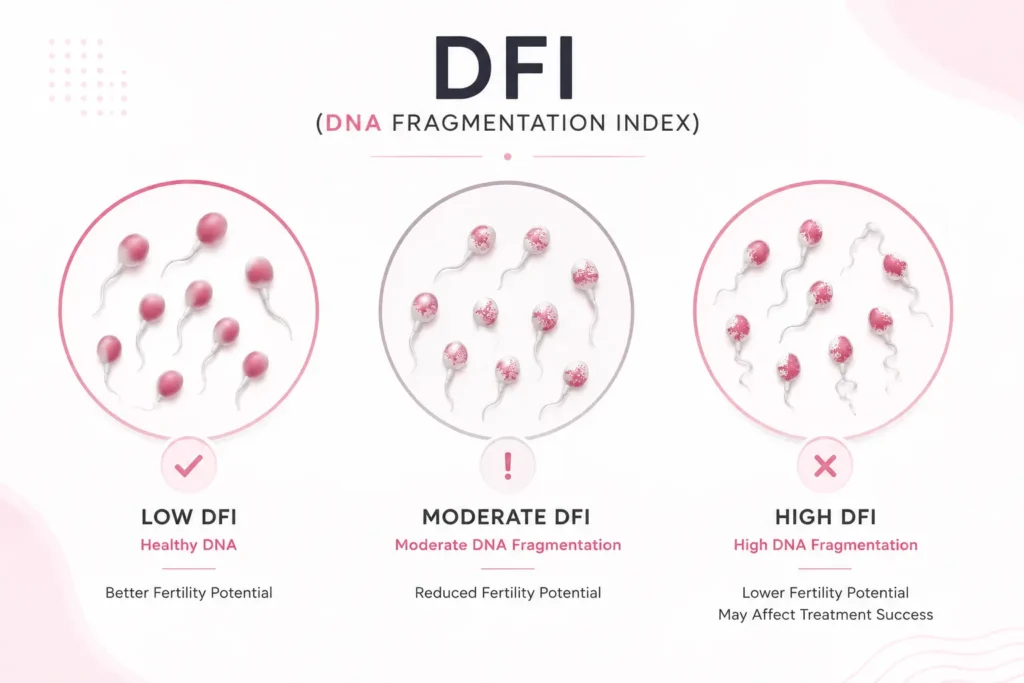
The DNA Fragmentation Index, or DFI, measures the percentage of sperm that carry broken or damaged genetic material. These sperm may look completely normal under a microscope. They may swim well. But when a sperm with fragmented DNA fertilizes an egg, it introduces genetic errors from the very first cell division. The results are predictable and heartbreaking:
- Fertilization fails despite normal-looking sperm and good eggs
- Embryos develop poorly and arrest before the blastocyst stage
- Implantation fails after embryo transfer
- Pregnancy ends in miscarriage, often in the first trimester
- IVF cycles fail repeatedly with no explanation from a standard semen report
The threshold that matters: a DFI below 15% is normal. Between 15% and 30% is moderate – outcomes may be affected. Above 30% is high and is almost certainly playing a role in the couple’s fertility problems.
The American Society for Reproductive Medicine now formally recognizes sperm DNA fragmentation testing as an important diagnostic tool for couples with unexplained infertility or recurrent IVF failure. Dr. Pavan Bendale has been incorporating DFI testing into his diagnostic workup for male infertility because the results change treatment decisions in a meaningful way – not as an afterthought, but as a standard part of the evaluation.
“Our IVF failed twice at another clinic. No one tested my husband beyond the basic report. Dr. Pavan Bendale ordered the DFI test on our first visit. Fragmentation was 38%. Once that was addressed, our third cycle worked. That one test changed everything.”
– Verified patient, Google Reviews
Who Should Get This Test Done – and When?
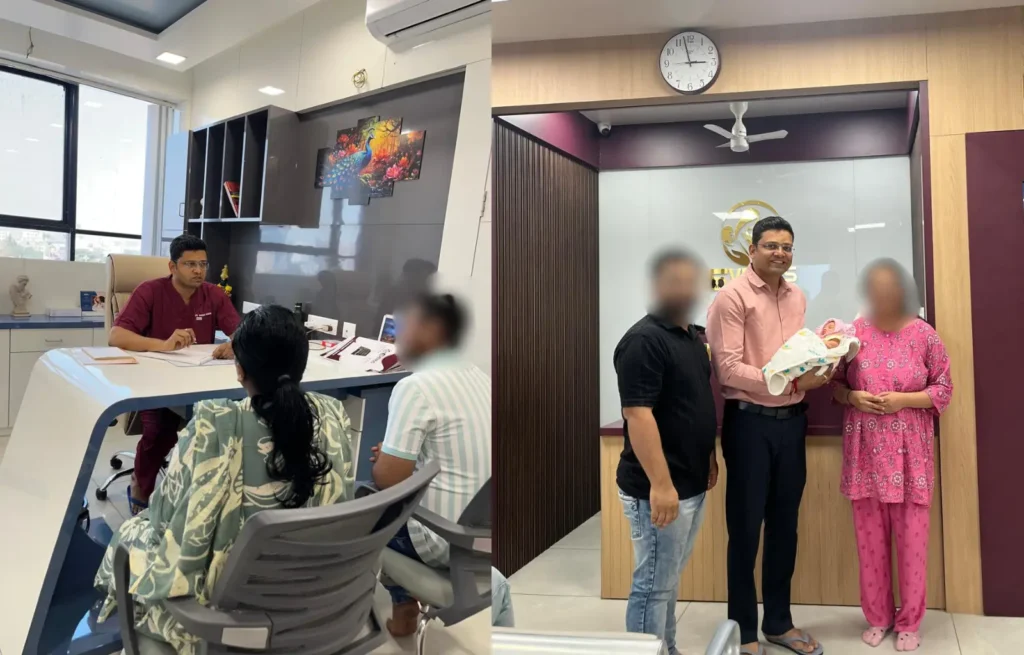
If you or your partner is based in Wakad, Baner, Balewadi, Hinjewadi IT Park area, Sus Road, Ravet, Punawale, or anywhere in the Pimpri-Chinchwad municipal zone – this section is relevant to you.
Dr. Pavan Bendale recommends a comprehensive semen analysis in these situations:
- You have been trying to conceive for 6 months or more without success
- Your partner is above 35 and you want to rule out male factor quickly
- You have a known history of varicocele, undescended testis, or any prior testicular surgery or injury
- You have undergone chemotherapy, radiation therapy, or have been on long-term medication known to affect sperm production
- Your partner has had two or more miscarriages and female causes have been investigated or ruled out
- A previous IUI or IVF cycle failed despite good egg quality and strong embryo grades
- You are about to begin fertility treatment and want a full baseline picture before choosing a protocol
DFI testing specifically is recommended when a standard semen report looks acceptable but conception is still not happening or after repeated IVF failures that have no clear explanation.
The earlier this test is done, the earlier the right treatment begins. Couples in Wakad and Hinjewadi who come to Dr. Pavan Bendale early spend less time, less money, and far less emotional energy than those who come after years of unguided treatment.
How the Test Works – Step by Step
Before You Come In
You will be asked to abstain from ejaculation for 2 to 5 days before the test. Less than 2 days and the count will be artificially low. More than 5 days and older sperm accumulate, skewing motility and DFI results. The clinic team gives precise instructions in advance so nothing is left to guesswork.
Sample Collection

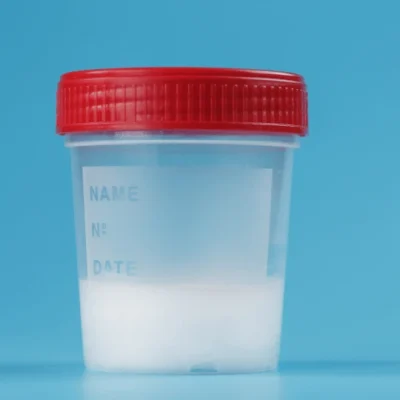
The sample is collected on-site at the clinic in a private, clean room – not at home, not in a public lab. This matters because semen quality degrades within minutes of exposure to temperature changes and time delays. On-site collection ensures the sample is analysed at its actual quality, not a deteriorated version of it.
In-House Lab Processing
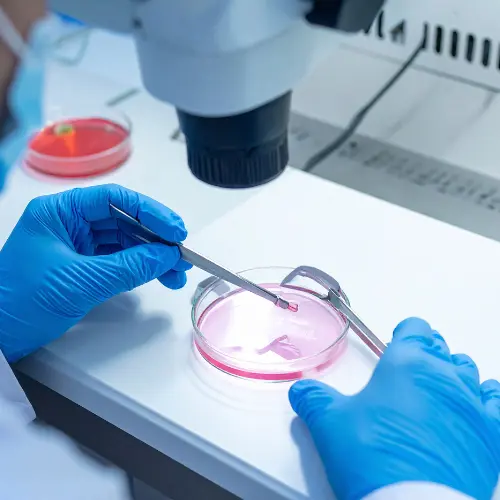
The sample goes directly into Dr. Pavan Bendale’s andrology lab. All seven parameters are assessed. For DFI testing, a separate aliquot of the sample undergoes specialized DNA fragmentation assay processing. Everything happens in-house – no third-party lab, no overnight courier, no batch processing that introduces delay and error.
Report Review with Dr. Pavan Bendale
This is what separates this practice from a standalone diagnostics centre. The report is not handed to you in an envelope. Dr. Pavan Bendale sits with you, explains what each value means in the context of your specific situation, and outlines the logical next steps. Whether that is a lifestyle change, a 3-month antioxidant protocol, IUI, IVF, or ICSI – that decision is grounded in complete, accurate data.
Dr. Pavan Bendale vs. Standard Labs in and Around Wakad
| What Matters | Dr. Pavan Bendale | Typical Pathology Labs |
|---|---|---|
| Parameters tested | 7+ per WHO 2021 standards | 2–3 (count and motility only) |
| Morphology grading method | Strict Kruger criteria | Often skipped or loosely graded |
| DFI (sperm DNA fragmentation) testing | ✓ Available in-house | ✗ Not offered |
| Sample collection facility | ✓ Private on-site room | ✗ Uncomfortable or unavailable |
| Sample processing time | ✓ Immediate, on-site | ✗ Batch-processed, often delayed |
| Report explained by a doctor | ✓ Personally by Dr. Pavan Bendale | ✗ Handed over without context |
| Treatment guidance after results | ✓ Same-day clinical plan | ✗ Referred elsewhere |
| Reference standards used | ✓ WHO 2021 | ✗ Often outdated (WHO 2010 or older) |
Can Sperm Quality Actually Be Improved?
Yes, and this is one of the most underappreciated facts in male fertility. Sperm take approximately 74 days to complete their development cycle. That means the choices a man makes today will directly affect the quality of sperm his body produces three months from now. The window for improvement is real and meaningful.
After reviewing your semen analysis and DFI results, Dr. Pavan Bendale will outline a targeted action plan. Depending on what the numbers show, this may include:
- Antioxidant therapy — to reduce oxidative stress, which is one of the leading drivers of sperm DNA fragmentation in men from high-stress, high-pollution environments like Hinjewadi and Pimpri-Chinchwad
- Treating infections — when elevated WBCs confirm an underlying infection is actively damaging sperm quality
- Varicocele assessment and treatment — varicocele is the most common correctable cause of male infertility, and it responds well to surgical intervention when identified correctly
- Lifestyle changes — reducing alcohol, quitting smoking, managing weight, correcting heat exposure habits (hot water baths, laptops on laps, prolonged sitting) that damage sperm production
- Hormonal correction — when testosterone, FSH, or LH levels are contributing to low sperm production
- Protocol adjustment for ART — if DFI remains high despite intervention, switching from standard IVF insemination to ICSI can meaningfully improve fertilization outcomes
None of this is possible without knowing the actual numbers first. And the actual numbers only come from a complete evaluation, not a basic report from a walk-in lab.
Frequently Asked Questions
Is the test private and comfortable?
Yes. The sample collection room at Dr. Pavan Bendale’s clinic is private, clean, and handled with complete discretion. The team is trained to manage this process professionally. It is a routine clinical test – nothing about the experience here will make it feel otherwise.
Can one semen report give a final answer?
Not always. Sperm parameters can shift significantly based on recent illness, a stressful period, heat exposure, or changes in diet and sleep. If the first report shows borderline or abnormal values, Dr. Pavan Bendale typically recommends a repeat test after 4 to 6 weeks before confirming a diagnosis or committing to a treatment plan.
My semen report is “normal” but we still cannot get pregnant. What should we do?
This is the most common situation where DFI testing changes everything. A semen report can look entirely normal – good count, good motility, acceptable morphology – and DNA fragmentation can still be dangerously high. The standard report does not test for it. DFI testing fills that gap and has helped many couples in Wakad and Hinjewadi who had been stuck with no clear direction finally understand why conception was failing.
We have had two miscarriages. Could this be related to the husband’s semen?
Yes, it absolutely could. Recurrent miscarriage is one of the strongest clinical indications for DFI testing. When sperm carry high levels of fragmented DNA, they can fertilize an egg and trigger early pregnancy, but the genetic errors introduced cause the pregnancy to fail, often before 12 weeks. This cause is found through DFI testing, not standard semen analysis.
Does the husband’s age matter?
It does. While men produce sperm throughout life, both sperm quality and DNA integrity decline with age, particularly after 40. Fragmentation rates increase, and the likelihood of de novo genetic mutations in sperm rises as well. If you are in your late 30s or 40s and based in Wakad, Baner, or Balewadi, testing sooner rather than later gives you more options and more time to act on what the results show.
How soon are results available?
A standard semen analysis report is ready the same day. DFI results typically come within 24 to 48 hours. A consultation with Dr. Pavan Bendale is scheduled once both reports are ready so that everything is reviewed together in context.
Is it okay to get tested before we’ve started any fertility treatment?
Not just okay, it is the right approach. Knowing the male factor status before starting IUI or IVF means the treatment plan is built on complete information. Couples who do this spend less money and reach a successful outcome significantly faster than those who start treatment first and investigate later.
“We were going in circles for over a year. My wife had done everything, tests, scans, hormones. I had one basic semen test done at a local lab and it said normal. Dr. Pavan Bendale tested me properly on our very first appointment. The DFI was the issue. We had an answer within 48 hours of walking into his clinic.”
– Verified patient, Google Reviews
Get the Complete Picture. Not Half of It.
If you are in Wakad, Tathawade, Hinjewadi, Baner, Balewadi, Ravet, Punawale, Aundh, or anywhere in the Pimpri-Chinchwad area and you are looking for semen analysis and DFI testing done properly – Dr. Pavan Bendale’s clinic is the closest and most capable option available to you.
The test takes one appointment. The report is ready the same day. The conversation that follows it can change the entire direction of your fertility journey.
Stop working with half a diagnosis.
Dr. Pavan Bendale — Fertility Specialist, Wakad
301, 3rd Floor, Darekar Heights, Dange Chowk Road, Bhumkar Chowk Rd, Opp. Pandit Petrol Pump, Tathawade, Pune 411033
Call / WhatsApp: 07840950737