If your gynecologist has told you that you need surgery, your first reaction is probably fear. That is completely normal. But here is something that changes the picture entirely. Most gynecological surgeries today do not require large incisions, long hospital stays, or weeks of painful recovery. Laparoscopic surgery has changed all of that.
If you are looking for laparoscopic gynecology in Wakad, this page will explain exactly what laparoscopy is, which conditions it treats, how the procedure works, and why patients from Wakad, Hinjewadi, Tathawade, Baner, and Pimpri-Chinchwad are choosing Dr. Pavan Bendale (M.B.B.S., DGO, DNB) for their gynecological surgeries.
What Is Laparoscopic Gynecological Surgery?
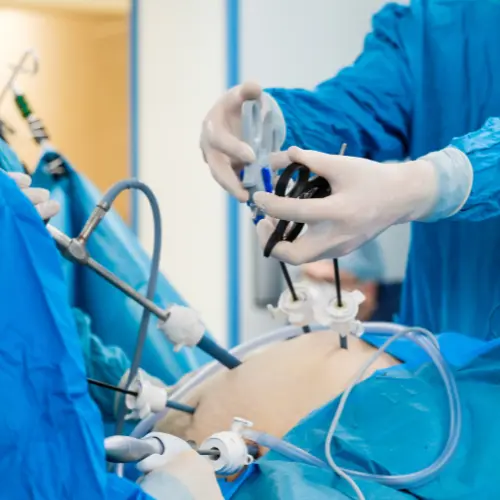
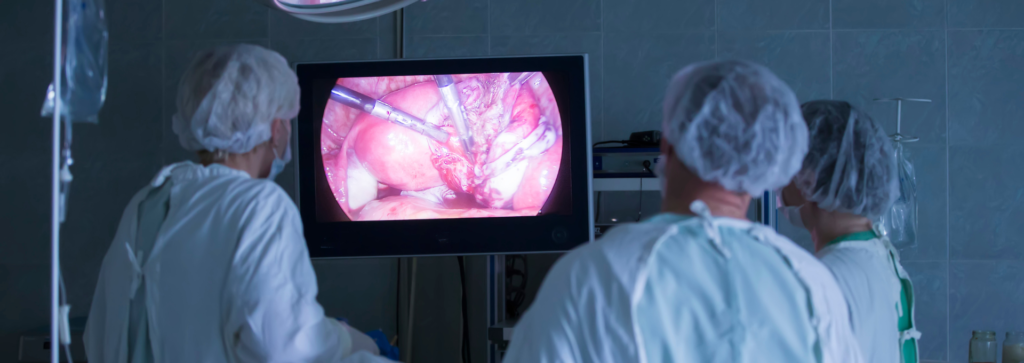
Laparoscopy is a minimally invasive surgical technique where the surgeon operates through 2 to 3 tiny incisions (usually 5 to 10mm each) instead of one large cut across the abdomen. A thin camera called a laparoscope is inserted through one incision, giving the surgeon a magnified, high-definition view of the internal organs on a monitor. Specialized instruments are inserted through the other incisions to perform the actual surgery.
The result? Smaller cuts. Less blood loss. Less pain. Shorter hospital stay. And significantly faster recovery compared to traditional open surgery.
Dr. Pavan Bendale has extensive training and hands-on experience in advanced laparoscopic gynecological procedures. Whether it is a diagnostic laparoscopy to find the cause of unexplained pelvic pain or a complex surgery to remove large fibroids, the approach is always precision-first with your safety and recovery as the top priority.
Which Conditions Can Be Treated with Laparoscopic Surgery?
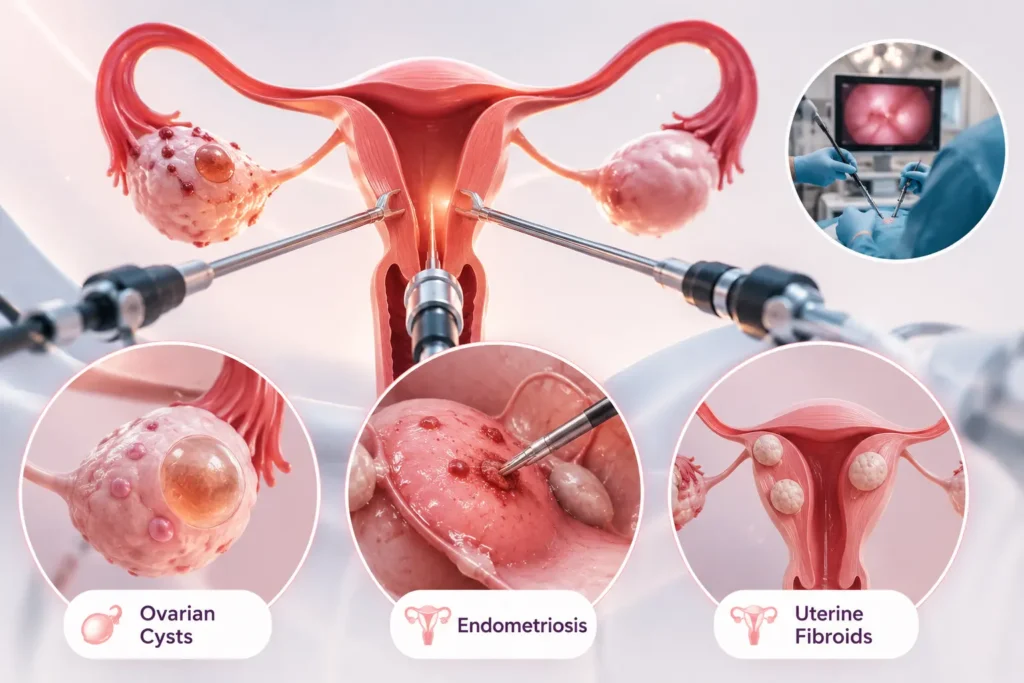
Laparoscopy is not limited to one or two conditions. It has become the preferred surgical approach for a wide range of gynecological problems. Here are the conditions Dr. Pavan Bendale treats laparoscopically at his practice in Wakad:
1. Ovarian Cysts
Functional cysts, dermoid cysts, endometriotic cysts (chocolate cysts), and other ovarian masses can be removed laparoscopically while preserving as much healthy ovarian tissue as possible. This is especially important for women who still want to conceive.
2. Endometriosis
Endometriosis causes tissue similar to the uterine lining to grow outside the uterus, leading to severe pain, heavy periods, and fertility issues. Laparoscopic excision or ablation of endometriotic deposits is the gold standard treatment. Dr. Pavan Bendale carefully removes or destroys the abnormal tissue while protecting surrounding organs.
3. Uterine Fibroids (Myomectomy)
Fibroids are non-cancerous growths in or on the uterus that can cause heavy bleeding, pelvic pressure, and difficulty conceiving. Laparoscopic myomectomy removes the fibroids while keeping the uterus intact. This is the preferred approach for women who want to preserve their fertility.
4. PCOS (Ovarian Drilling)
For women with Polycystic Ovary Syndrome who do not respond to medication for ovulation induction, laparoscopic ovarian drilling is an option. Small holes are made in the surface of the ovaries using electrocautery, which can help restore natural ovulation cycles.
5. Blocked Fallopian Tubes
Tubal blockages are one of the leading causes of female infertility. Diagnostic laparoscopy with chromopertubation (dye test) confirms the blockage. In some cases, tubal adhesions can be released laparoscopically to restore tubal patency.
6. Ectopic Pregnancy
When a pregnancy implants outside the uterus (most commonly in the fallopian tube), it is a medical emergency. Laparoscopic removal of the ectopic pregnancy is faster, safer, and leaves minimal scarring compared to open surgery.
7. Hysterectomy (Uterus Removal)
When hysterectomy is medically necessary due to severe fibroids, adenomyosis, abnormal uterine bleeding, or early-stage cancer, laparoscopic hysterectomy offers a far better recovery experience than traditional abdominal hysterectomy. Smaller incisions, less pain, and most patients go home within 24 to 48 hours.
8. Diagnostic Laparoscopy for Unexplained Infertility
When all blood tests, ultrasounds, and semen analysis come back normal but pregnancy is still not happening, a diagnostic laparoscopy allows Dr. Pavan Bendale to visually inspect the uterus, ovaries, fallopian tubes, and pelvic cavity for hidden issues like mild endometriosis, adhesions, or subtle tubal damage that scans cannot detect.
According to the American College of Obstetricians and Gynecologists (ACOG), laparoscopic surgery is now the standard of care for most gynecological conditions due to its proven advantages in safety, recovery, and clinical outcomes over traditional open surgery.
“I had a 7cm ovarian cyst and was told by two doctors that I would need open surgery. Dr. Pavan Bendale removed it laparoscopically. Two tiny scars. I was back at work in 5 days. I could not believe how quick the recovery was.”
— Verified patient, Google Reviews
How Does a Laparoscopic Procedure Work, Step by Step?
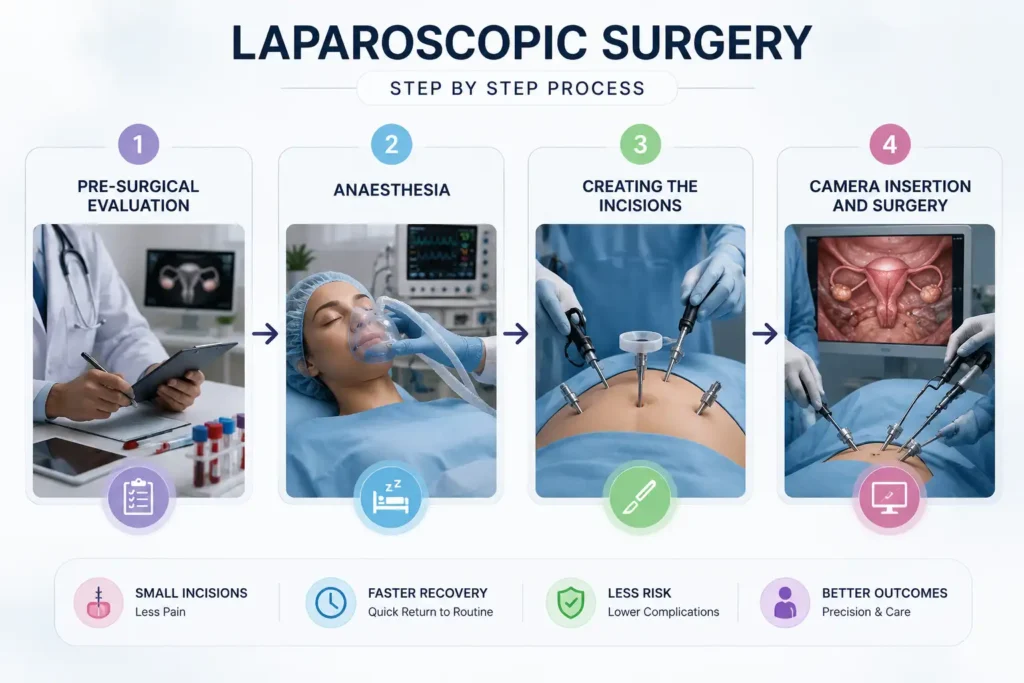
Understanding the process removes a lot of the anxiety. Here is what happens during a typical laparoscopic gynecological surgery under Dr. Pavan Bendale:
1. Pre-Surgical Evaluation
Blood tests, imaging, and a detailed consultation to confirm the diagnosis and plan the surgical approach. Dr. Pavan Bendale explains exactly what will be done, why, and what to expect during recovery.
2. Anaesthesia
Laparoscopic surgery is performed under general anaesthesia. You will be completely asleep and feel nothing during the procedure.
3. Creating the Incisions
Two to three small incisions (5 to 10mm) are made on the abdomen. Carbon dioxide gas is gently pumped into the abdominal cavity to create space for the surgeon to see and work.
4. Camera Insertion and Surgery
The laparoscope (camera) goes in through one incision. Surgical instruments go through the others. Dr. Pavan Bendale operates while watching a magnified high-definition view on a monitor. This magnification actually allows more precise surgery than what is possible with the naked eye in open procedures.
5. Closure and Recovery
Once the procedure is complete, the gas is released, instruments are removed, and the tiny incisions are closed with absorbable sutures or surgical glue. Most patients wake up within 30 minutes and can walk within a few hours.
6. Discharge
The majority of laparoscopic procedures are day-care or require just one night of observation. You go home the next morning with clear instructions on wound care, activity restrictions, and follow-up.
Laparoscopic Surgery vs. Open Surgery: Side-by-Side Comparison
| Factor | Laparoscopic (Dr. Pavan Bendale) | Traditional Open Surgery |
|---|---|---|
| Incision size | 5 to 10mm (2-3 cuts) | 10 to 15cm single cut |
| Blood loss | Minimal | Significantly higher |
| Hospital stay | Same day or 1 night | 3 to 7 days |
| Recovery time | 5 to 7 days | 4 to 6 weeks |
| Post-operative pain | Mild (managed with oral painkillers) | Moderate to severe |
| Scarring | Nearly invisible | Visible abdominal scar |
| Infection risk | Very low | Higher due to larger wound |
| Return to work | Within 1 week | 3 to 6 weeks |
Laparoscopy and Fertility: Why This Matters If You Want to Conceive

One of the biggest advantages of laparoscopic surgery over open surgery is how much better it preserves fertility. Here is why that matters:
1. Less tissue damage means fewer post-surgical adhesions (scar tissue), which can block fallopian tubes or distort pelvic anatomy
2. Ovarian cyst removal with laparoscopy preserves more healthy ovarian tissue compared to open surgery
3. Laparoscopic myomectomy removes fibroids without compromising the uterine wall integrity needed for future pregnancies
4. Endometriosis excision through laparoscopy improves natural conception rates and IVF success rates significantly
5. Faster recovery means less delay before you can start or resume fertility treatment
Dr. Pavan Bendale approaches every surgery with fertility preservation in mind. Even when the primary reason for surgery is pain relief or heavy bleeding, the surgical technique is chosen to protect your reproductive potential whenever possible.
The World Health Organization recognizes that surgical management of conditions like endometriosis and tubal disease through minimally invasive techniques plays a critical role in addressing female infertility globally.
Frequently Asked Questions About Laparoscopic Gynecology in Wakad
Is laparoscopic surgery safe?
Yes. Laparoscopy is one of the safest surgical techniques in modern medicine. Complications are rare, especially when performed by an experienced surgeon like Dr. Pavan Bendale who has done hundreds of these procedures.
How long does a laparoscopic surgery take?
It depends on the procedure. A diagnostic laparoscopy may take 20 to 30 minutes. A laparoscopic myomectomy or hysterectomy may take 1 to 2 hours. Dr. Pavan Bendale will give you an estimated duration based on your specific case.
Will I have visible scars?
The incisions are 5 to 10mm, roughly the size of a pencil tip. They heal into faint marks that are barely visible within a few months. Most patients forget they are even there.
Can I get pregnant after laparoscopic surgery?
In most cases, yes. In fact, that is often the goal. Removing cysts, fibroids, endometriosis, or tubal adhesions laparoscopically can significantly improve your chances of natural conception or IVF success. Dr. Pavan Bendale plans the fertility timeline with you before and after surgery.
How soon can I go back to work?
Most patients return to desk jobs within 5 to 7 days. Physically demanding work may need 2 to 3 weeks. Dr. Pavan Bendale gives personalized recovery guidelines based on the type of surgery performed.
Is laparoscopy covered by insurance?
Most health insurance plans in India cover laparoscopic gynecological procedures. Dr. Pavan Bendale’s team can help you with the documentation and pre-authorization process.
“I had multiple fibroids and was told I might need to remove my uterus. Dr. Pavan Bendale removed all the fibroids laparoscopically and saved my uterus. Six months later, I conceived naturally. I still cannot believe the same doctor who did my surgery also guided my pregnancy.”
— Verified patient, Google Reviews
Thinking About Surgery? Start with a Conversation.
If you have been diagnosed with ovarian cysts, fibroids, endometriosis, or any condition that might need surgical intervention, the first thing you need is clarity. Not fear. Not confusion. Just a clear explanation of what is happening, what your options are, and which approach gives you the best outcome with the least disruption to your life.
Dr. Pavan Bendale will review your reports, explain whether laparoscopic surgery is the right call for your situation, and walk you through the entire process so you know exactly what to expect before, during, and after.
Dr. Pavan Bendale
301, 3rd Floor, Darekar Heights, Dange Chowk Road, Bhumkar Chowk Rd, Opp. Pandit Petrol Pump, Tathawade, Pune 411033
Less pain. Faster recovery. The right surgeon. Book your consultation today.