Preeclampsia, gestational diabetes, and fetal growth restriction (IUGR) are the three most common complications in high-risk pregnancy. All three can be completely without visible symptoms. A woman carrying a baby with restricted growth feels no different from a woman whose baby is growing normally. A woman developing preeclampsia can have dangerously high blood pressure with no headache, no swelling, and no signal at all that something is wrong.
That is the nature of high-risk pregnancy.
The risk is real. The symptoms often are not.
One in five pregnancies in India is classified as high-risk, meaning it carries an elevated chance of complications due to a condition in the mother, the baby, or both. Gestational diabetes affects 10 to 14 percent of pregnant women in India, one of the highest rates in the world. Preeclampsia affects 5 to 8 percent of all pregnancies globally and remains a leading cause of maternal death when identified late.
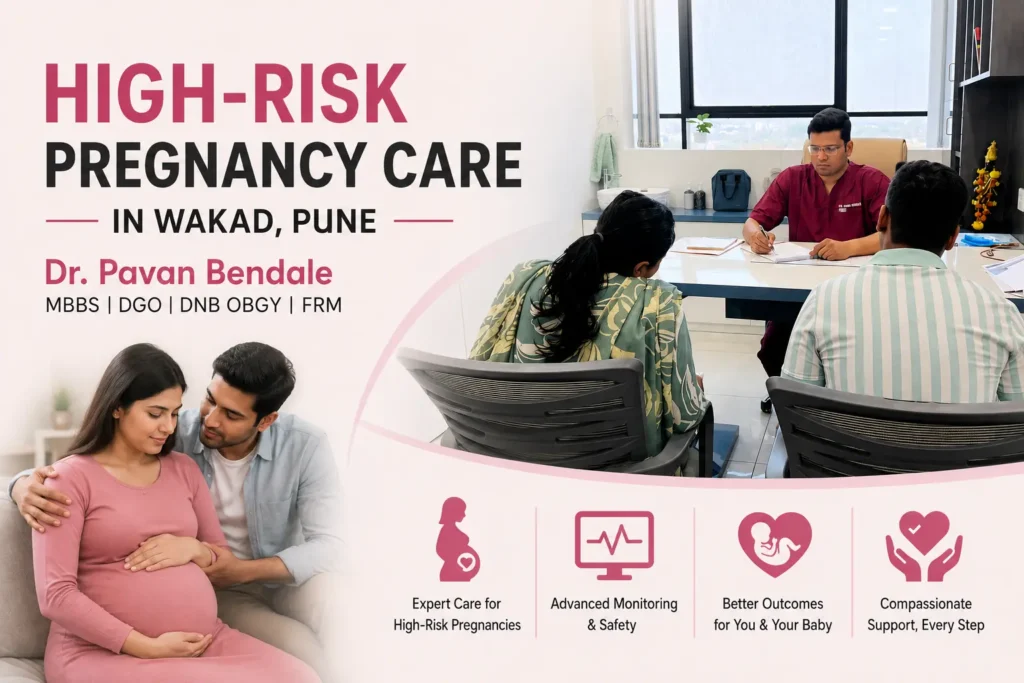
Dr. Pavan Bendale (M.B.B.S., DGO, DNB) specialises in high-risk pregnancy care in Wakad at his clinic in Tathawade, managing preeclampsia, gestational diabetes, IUGR, twin pregnancy, thyroid disorders in pregnancy, advanced maternal age, and pregnancies following IVF. Growth scans, Doppler studies, and non-stress tests are all done in-house. Patients from Wakad, Hinjewadi, Baner, Balewadi, Aundh, and across Pimpri-Chinchwad are not referred to an outside centre for any step in routine surveillance.
What Makes a Pregnancy High-Risk?
A pregnancy is classified as high-risk when a condition in the mother, the baby, or both increases the chance of complications before, during, or after delivery.
That condition may already be present before pregnancy begins. Or it may develop during the pregnancy itself.
The most common reasons a pregnancy is classified as high-risk:
- Gestational diabetes or pre-existing Type 1 or Type 2 diabetes
- Hypertension diagnosed before pregnancy or developing during it
- Thyroid disorders, both hypothyroidism and hyperthyroidism
- Autoimmune conditions including lupus and antiphospholipid syndrome
- Carrying twins, triplets, or higher-order multiples
- Advanced maternal age (above 35 at the time of delivery)
- Previous pregnancy losses, recurrent miscarriage, or a history of preterm birth
- Fetal growth restriction (IUGR) or concerns flagged on an anomaly scan
- Placenta previa or low-lying placenta
- Pregnancies conceived through IVF or assisted reproduction
- Obesity with a BMI above 30 at the start of pregnancy
- Previous delivery by caesarean section with specific uterine scar considerations
Being on this list does not predict a bad outcome. It defines the level of attention the pregnancy requires.
Conditions Managed by Dr. Pavan Bendale
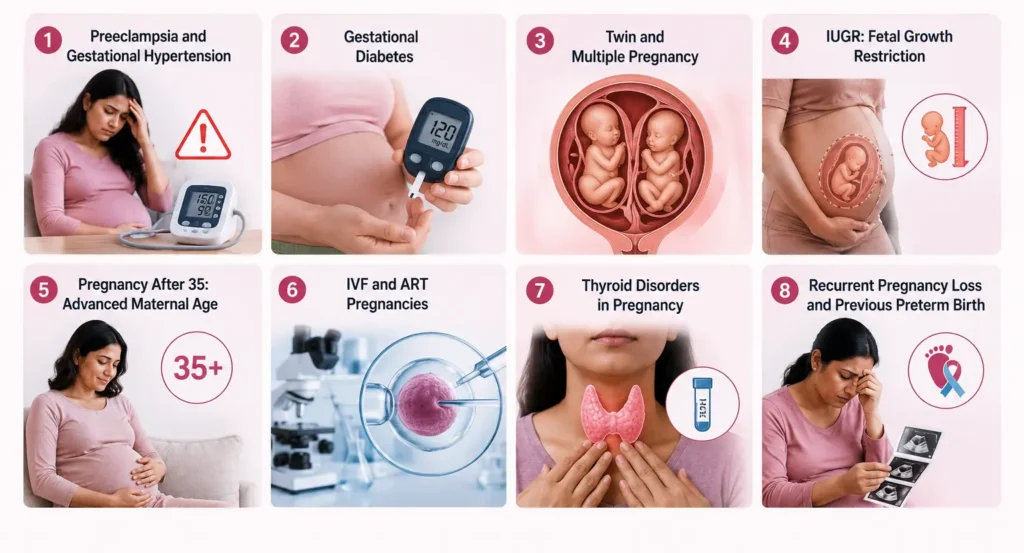
Preeclampsia and Gestational Hypertension
Preeclampsia is one of the most serious complications of pregnancy and one of the leading causes of maternal and fetal mortality worldwide.
It develops after 20 weeks of pregnancy, is marked by high blood pressure and protein in the urine, and can progress rapidly to eclampsia (seizures), HELLP syndrome, or placental abruption if not caught and managed in time.
The challenge with preeclampsia is that many women feel completely normal until the condition is advanced. Regular blood pressure checks, urine protein screening, and early Doppler studies of the uterine arteries allow Dr. Pavan Bendale to identify risk early, before symptoms appear, and put a management plan in place.
The American College of Obstetricians and Gynecologists (ACOG) identifies low-dose aspirin from early pregnancy as an evidence-based intervention for women at high risk of preeclampsia. This is part of the proactive approach Dr. Pavan Bendale applies for women who meet the risk criteria.
Gestational Diabetes
Gestational diabetes develops when the body cannot produce enough insulin to meet the increased demands of pregnancy.
It carries risks for both mother and baby. In the mother, it increases the risk of preeclampsia and a higher chance of Type 2 diabetes later in life. In the baby, it can cause macrosomia (large baby), birth complications, neonatal hypoglycaemia, and a higher risk of childhood obesity and diabetes.
Most women with well-managed gestational diabetes deliver healthy babies without complications.
The word “managed” is doing the work in that sentence. Management means regular blood glucose tracking, dietary modification, medication or insulin where needed, and growth scans to monitor the baby’s size throughout the third trimester. Dr. Pavan Bendale runs this as a structured protocol, not a series of disconnected appointments.
Twin and Multiple Pregnancy
Every twin pregnancy is automatically high-risk.
The risks depend on whether the twins share a placenta (monochorionic) or have separate placentas (dichorionic). Monochorionic twins carry the risk of twin-to-twin transfusion syndrome (TTTS), a serious condition where blood flows unevenly between the twins through shared blood vessels. This requires scan surveillance at much shorter intervals than a singleton pregnancy.
All twin pregnancies carry elevated risks of preterm labour, growth discordance, and preeclampsia. The monitoring schedule Dr. Pavan Bendale follows for multiple pregnancies is more intensive than standard antenatal care, because the gap between a problem appearing and a problem becoming serious is shorter.
IUGR: Fetal Growth Restriction
Intrauterine growth restriction (IUGR) means the baby is not growing at the expected rate inside the womb.
It is identified through serial growth scans comparing measurements across gestational ages and through Doppler studies of the umbilical artery, which show how efficiently blood and nutrients are flowing from the placenta to the baby. When Doppler values deteriorate, the timing of delivery becomes a critical clinical decision.
IUGR is managed by tracking, not waiting. Frequent growth scans and Doppler studies at Dr. Pavan Bendale’s clinic allow the growth pattern to be trended over time, giving early warning before the baby’s condition becomes an emergency.
Pregnancy After 35: Advanced Maternal Age
Medically, any pregnancy where the mother will be 35 or older at delivery is classified as advanced maternal age.
The risks that increase with age include chromosomal conditions in the baby (Down syndrome, Edwards syndrome, Patau syndrome), gestational diabetes, hypertension, placenta previa, and a higher rate of caesarean delivery. None of these are inevitable. All of them are screenable.
Women above 35 benefit significantly from first-trimester combined screening, the NIPT (Non-Invasive Prenatal Test) for chromosomal conditions, the anomaly scan at 18 to 20 weeks, and more frequent growth surveillance in the third trimester.
Dr. Pavan Bendale structures antenatal care for women above 35 differently from standard care, because the risk profile is different and the screening schedule needs to reflect that.
IVF and ART Pregnancies
Pregnancies conceived through IVF or other assisted reproduction methods carry a higher baseline risk than naturally conceived pregnancies.
This is partly because IVF pregnancies have a significantly higher rate of twins and multiples. It is also because the conditions that led to the need for IVF in the first place, such as PCOS, endometriosis, uterine abnormalities, or poor ovarian reserve, can themselves affect pregnancy.
IVF pregnancies need closer first-trimester monitoring, careful scan surveillance to confirm fetal viability and placentation, and a clear handover plan between fertility care and antenatal care. When the IVF is managed by Dr. Pavan Bendale, that transition happens within the same practice, with no loss of clinical history or context.
Thyroid Disorders in Pregnancy
Thyroid hormones are critical for fetal brain development, particularly in the first trimester before the fetal thyroid is functional.
Both hypothyroidism and hyperthyroidism in pregnancy are associated with miscarriage, preterm birth, fetal growth problems, and developmental risks for the baby. In India, subclinical hypothyroidism is significantly underdiagnosed in pregnant women.
TSH targets in pregnancy are different from the standard non-pregnant reference range. Dr. Pavan Bendale screens thyroid function early and adjusts the target based on trimester-specific thresholds, ensuring the baby’s neurological development is not compromised by an undertreated thyroid condition in the mother.
Recurrent Pregnancy Loss and Previous Preterm Birth
A woman who has had two or more miscarriages, or who has delivered preterm in a previous pregnancy, carries a higher risk of the same happening again.
This does not mean it will. It means the risk needs to be understood, investigated, and mitigated.
Investigations for recurrent pregnancy loss include testing for antiphospholipid syndrome, thrombophilia, uterine structural abnormalities, hormonal causes, and chromosomal factors in both partners. For women with a previous preterm birth, cervical length surveillance starting from the second trimester and progesterone supplementation where indicated can significantly reduce the risk of a repeat preterm delivery.
What High-Risk Antenatal Monitoring Actually Involves
High-risk pregnancy care is not just more frequent appointments. It is a different type of appointment at every stage.
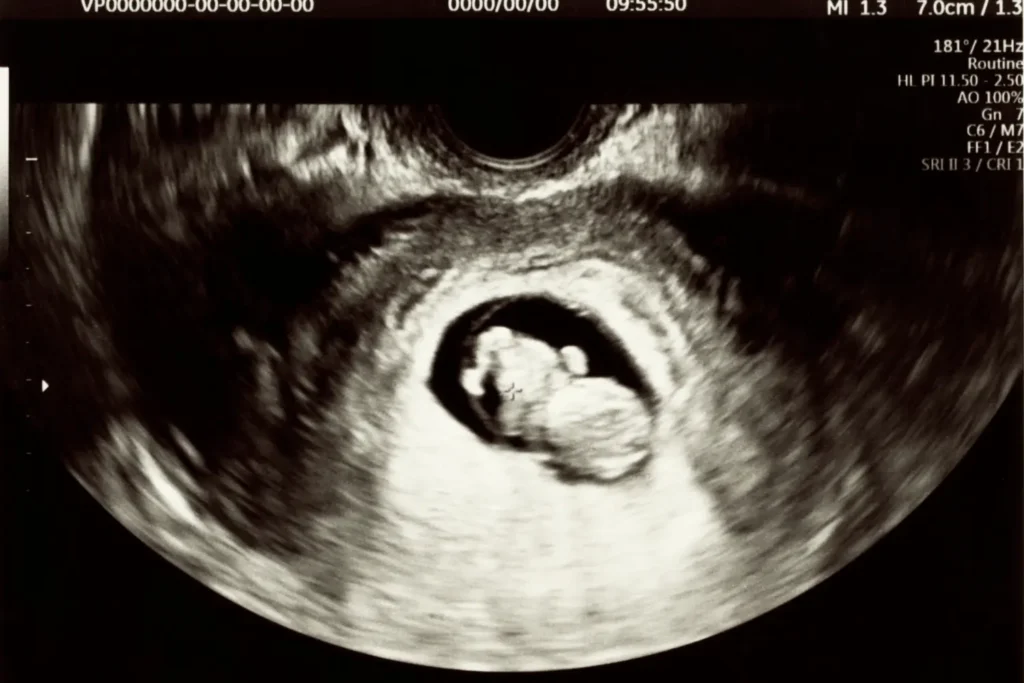
At Dr. Pavan Bendale’s clinic, the monitoring protocol for high-risk pregnancies includes:
- First trimester: Early viability scan, NT (nuchal translucency) scan, first-trimester combined screening for chromosomal conditions, thyroid and blood sugar baseline, blood pressure charting, and uterine artery Doppler for preeclampsia risk assessment
- Second trimester: Anomaly scan at 18 to 20 weeks, cervical length assessment for preterm risk, glucose tolerance test for gestational diabetes, growth assessment for twin pregnancies, and fetal echocardiography where indicated
- Third trimester: Serial growth scans every 3 to 4 weeks, umbilical artery Doppler studies, non-stress test (NST) from 32 weeks onward for high-risk cases, blood pressure and urine surveillance for preeclampsia, and delivery planning with a clear clinical indication for timing
Every scan at Dr. Pavan Bendale’s clinic is performed and interpreted by him directly. Detailed sonography and diagnostics are available in-house. The result is not sent to a separate reporting centre where context is lost. The person who knows your case is the person reading the image.
Why This Requires a Specialist, Not Just More Visits
A high-risk pregnancy managed without specialist training is not safer just because it is being monitored more often.
The difference is in knowing what the findings mean and what to do with them. When a Doppler study shows increased umbilical artery resistance, that information needs to trigger a specific clinical decision about timing and frequency of the next assessment. When blood pressure rises by a certain threshold, that number means something different at 28 weeks than it does at 36 weeks.
Dr. Pavan Bendale’s clinical training and practice in high-risk obstetrics means these decisions are protocol-driven and experience-backed, not reactive. The care plan going into the third trimester already accounts for what the risks are, what the triggers are, and what the response will be before those triggers are reached.
Women from Wakad, Hinjewadi, Baner, Balewadi, Aundh, Ravet, Punawale, Chinchwad, and Pimpri-Chinchwad who are navigating high-risk pregnancies access this level of care without travelling to a tertiary hospital for routine surveillance.
“I have Type 2 diabetes and was 37 when I got pregnant. Every doctor I saw before Dr. Pavan Bendale told me the risks in a way that felt like a warning, not a plan. He gave me a specific monitoring schedule, explained every test, and I always knew what we were watching for. My daughter was born healthy at 38 weeks.”
— Verified patient, Google Reviews
Frequently Asked Questions About High-Risk Pregnancy Care in Wakad
Does high-risk mean my pregnancy will have complications?
No. High-risk means your pregnancy carries a higher probability of certain complications and therefore requires closer monitoring and a specific care plan.
Most women with a high-risk classification deliver healthy babies. The classification exists to ensure the right level of attention is given, not to predict a bad outcome.
My doctor said my pregnancy is high-risk. What should I do next?
The first step is a detailed consultation with a specialist who handles high-risk obstetrics, not a general gynaecologist.
Dr. Pavan Bendale will review your complete history, identify the specific risk factors in your case, and build a monitoring and management plan around them. That plan will tell you exactly what is being watched, at what intervals, and what the thresholds are for escalation.
At what week does preeclampsia usually develop?
Preeclampsia most commonly develops after 20 weeks of pregnancy, with the highest incidence in the third trimester. In some cases it develops in the immediate postpartum period.
Risk assessment and early intervention with low-dose aspirin, where indicated, can begin as early as the first trimester for women identified as high-risk for preeclampsia.
I am pregnant with twins. What kind of monitoring do I need?
All twin pregnancies require more frequent monitoring than singleton pregnancies. The exact schedule depends on whether the twins share a placenta.
Monochorionic (shared placenta) twins require ultrasound every 2 weeks from 16 weeks onward to screen for twin-to-twin transfusion syndrome. Dichorionic twins require growth scans every 4 weeks from 24 weeks. Dr. Pavan Bendale outlines the specific schedule at your first twin pregnancy consultation.
I have gestational diabetes. Do I need to be on insulin?
Not always. Many women with gestational diabetes manage blood glucose effectively through dietary changes and regular monitoring alone.
Insulin or oral medication is recommended when target glucose levels cannot be maintained through diet. The decision is based on your glucose readings, not on a standard protocol applied to everyone with the same diagnosis.
I had a miscarriage before. How will this pregnancy be monitored differently?
One previous miscarriage is common and does not automatically classify you as high-risk. Two or more miscarriages warrant investigation into the underlying cause before or early in the next pregnancy.
Dr. Pavan Bendale runs a recurrent pregnancy loss workup covering blood clotting disorders, hormonal causes, uterine structure, and chromosomal factors in both partners, so the next pregnancy has the most complete picture possible behind its management.
I conceived through IVF. Does that mean my pregnancy is automatically high-risk?
IVF pregnancies do carry a higher baseline risk than naturally conceived pregnancies, particularly for twins, placentation issues, and preterm birth. That risk level varies based on individual factors.
Dr. Pavan Bendale manages IVF pregnancies with a closer monitoring schedule from the first trimester, building on the full clinical history from the IVF cycle itself.
I live in Hinjewadi. Is the clinic easily reachable?
Yes. Dr. Pavan Bendale’s clinic is in Tathawade, a short drive from Hinjewadi Phase 1, 2, and 3, and well within reach from Baner, Balewadi, and Wakad.
Appointment details and directions are on the contact page.
“I was told I had a low-lying placenta at 20 weeks and panicked completely. Dr. Pavan Bendale explained exactly what it meant, what we were watching for, and at what point it would or would not resolve. It resolved by 32 weeks and I had a normal delivery. The information he gave me throughout made all the difference.”
— Verified patient, Google Reviews
Your Pregnancy Deserves a Plan, Not Just a Precaution
High-risk pregnancy care in Wakad under Dr. Pavan Bendale is built around a specific clinical plan for your specific risk profile.
Not a generic “come every two weeks.” A structured monitoring schedule with defined triggers, clear thresholds, and a team that knows your case at every appointment.
If you have been told your pregnancy is high-risk, or if you have a pre-existing condition and are planning a pregnancy, the right time to build that plan is before a complication appears, not after one does.
Read more about Dr. Pavan Bendale’s qualifications and clinical background, or get in touch directly to schedule a consultation.
Dr. Pavan Bendale, Specialist in High-Risk Obstetrics and Fertility, Wakad
301, 3rd Floor, Darekar Heights, Dange Chowk Road, Bhumkar Chowk Rd, Opp. Pandit Petrol Pump, Tathawade, Pune 411033
Call / WhatsApp: 07840950737